|
|
|
|
|
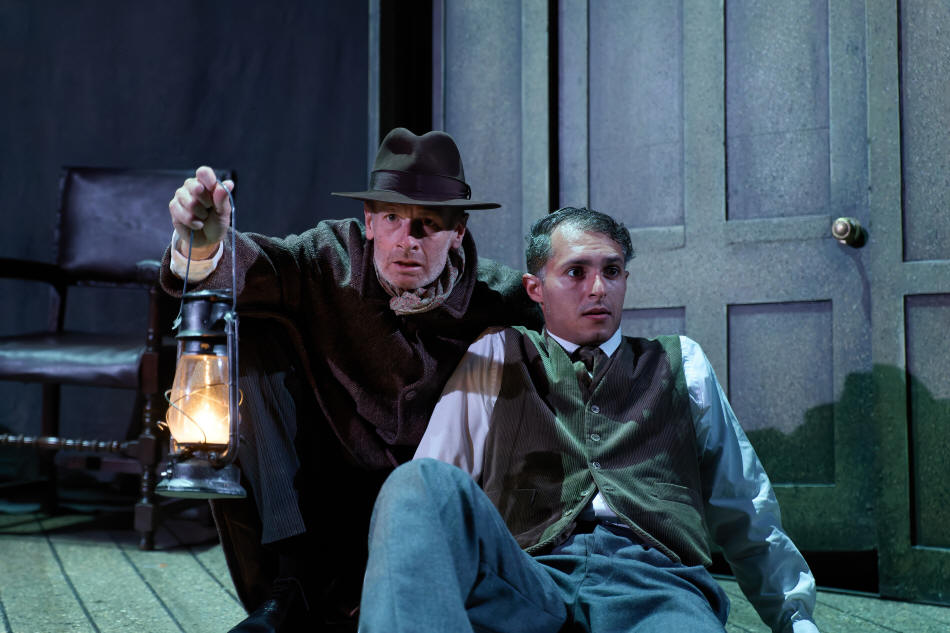
John Mackay as Arthur Kipps and Daniel Burke as The Actor. Pictures: Mark Douet The Woman in Black The Alexandra Theatre ***** A two-act stage play adapted by Stephen Mallatratt from Susan Hill's novel of the same name and directed by Robin Herford. From the outset, you are not merely watching a play but you feel involved, as the action takes place in the very theatre you are sitting in. An old Arthur Kipps played by John Mackay appears and after a few moments of wandering around the stage,as if lost, reads in a monotone voice and far too quietly from a manuscript of his story. There’s a temptation to shout out “speak up!” but this is all part of the plot. Eventually a young actor played by Daniel Burke, whom he has hired to help dramatise the tale, enters and encourages him to put more life into it. They agree to perform the story, with the Actor playing a younger Kipps, and Kipps himself playing all the other characters as well as narrating the play. The first 15 minutes or so may seem to be slow but it sets the scene for the rest of the story, so stick with it.
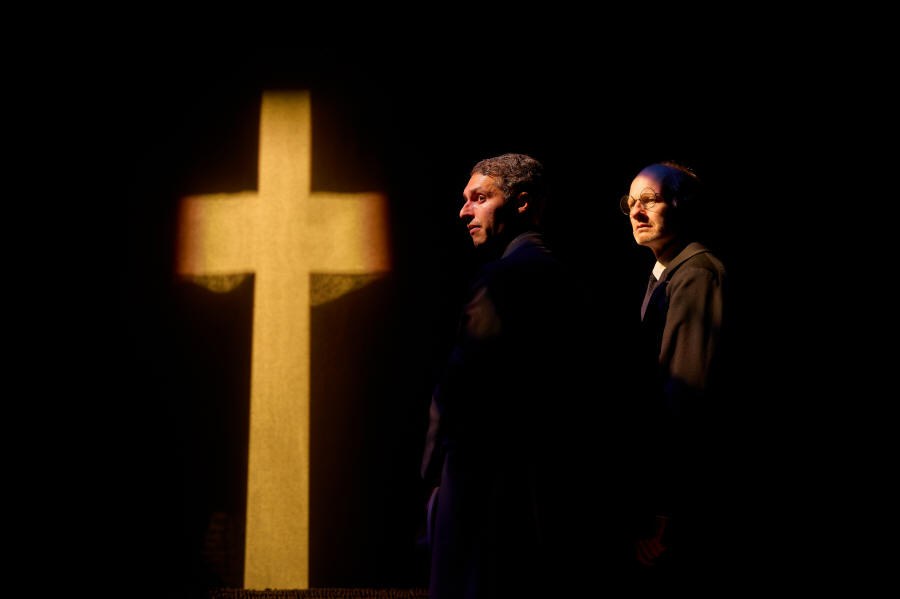
As the tale unfolds, we learn that the young Kipps is a lawyer, who, following the death of a reclusive widow, Mrs Drablow, travels to Crythin Gifford to sort through her private papers. When he arrives he is greeted by a local landowner and they both attend the funeral of Mrs Drablow where Arthur first sees a lone woman dressed in black. He is then driven by pony and trap by another local villager to the house of the deceased, which it turns out is reached by a causeway that is only accessible when the tide is out, making the crossing not only extremely treacherous but nye-on impossible when sea fog appears. Once Kipps is settled in the house he begins to hear and possibly see things and from then on, the tension really builds. This wonderfully atmospheric production uses a simple set and makes great use of a few props. A large wicker laundry basket becomes a desk, a seat in a train carriage and a horse and cart. It’s down to the skill of the actors which makes it all so convincingly believable. You even feel fearful for the small dog they mime, and hope she won’t come to any harm! The ease in which the two actors switch characters as the story unfolds, sweeps you along so smoothly, you get drawn in completely, and following a slow start, the action moves along at quite a pace. What helps to make this so genuinely frightening is the clever use of lighting and sound. At times the only source of light on stage is either a torch, a lantern or even just moonlight coming through a window. At times the shadows cast by Kipps as he moves about the house become the centre of your attention but you’re aware there may be other things lurking in the darker corners of the set, you daren’t take your eyes away for fear of missing something. Yes, there are a few jump scares along the way, which are accompanied by ear-piercing sound effects but equally effective are the moments of terrifying silence. For two actors to hold your attention for two hours (including an interval) is not only a testament to their talent but the direction and the story are all so tight and you are on the edge of your seat throughout. Without giving too much away, the final scene is utterly unnerving and leaves you feeling very unsettled, which after all, is what a good ghost story should do. I have to say this is stage version far more terrifying than the film of the same name. I’m afraid ‘Harry Potter’ in the lead role just didn’t do it for me! Alan Birch 28-01-26 On a personal note, unfortunately the first half of the play was spoiled by a tall man with one of the biggest heads I've ever had the misfortune to sit behind. Following a chat with the Theatre Director during the interval, we were relocated to the upper circle where we had a perfect view. Thank you so much Simon Creed, for your service beyond the call of duty. It was much appreciated. |
|
|
|