|
|
|
|
|
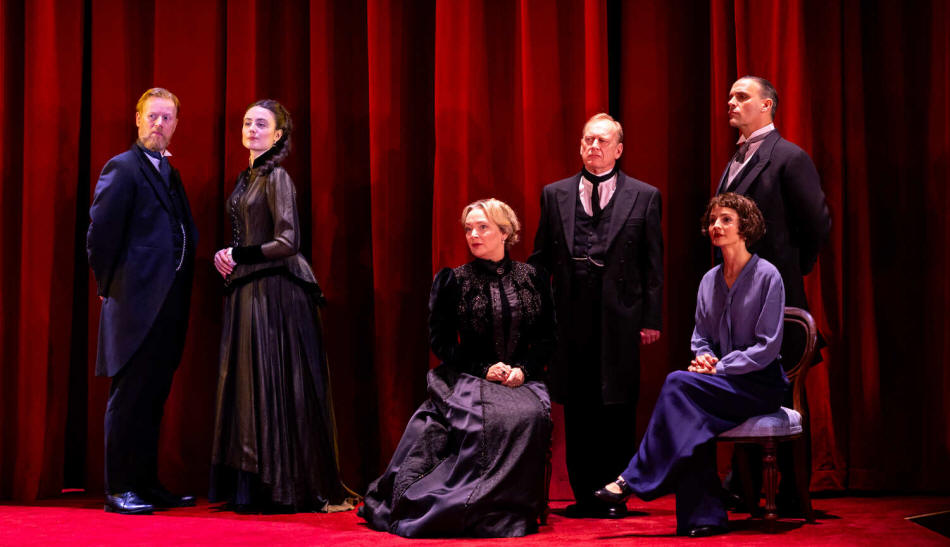
A family portrait . . . the Forsyte dynasty. Pictures: Cam Harle The Forsyte Saga 1&2 The Royel Shakespeare Company Stratford-upon-Avon ***** Behind the fortress-like walls of upwardly climbing middle class respectability, Ps and Qs alI in place, Is dotted and Ts meticulously crossed, the Forsyte dynasty were living a life of carefully constructed illusion. They longed to be seen as old money, what the French called vieilles familles, and by the time John Galsworthy chronicles their lives perhaps they had become entrenched enough to be seen as that, but history was not on their side – their wealth was self-made, they were, French again, nouveau riche. They were two generations down from Dorset farming stock with Old Jolyon the elder brother, and now the patriarch, having broken free from the family's agricultural heritage with shrewd and safe investments. Their past created a dilemma that left them obsessed with ownership, money and wealth, good manners or at least correct conduct and above all respectability and social standing, with any hint of scandal, God forbid, to be snuffed out, or at the very least kept in house and hidden from view. And it is into this world of obsession and deception that the RSC presents us with drama of epic proportions, spanning the Victorian and Edwardian eras and, most remarkable of all, the drama unfolds on an empty stage with just a handful of chairs as props. It is up to the actors to tell the story and tell it they do, brilliantly and intimately, bringing the disparate characters to life. Part 1, Irene, is about possession. The first book in the series of novels was The Man of Property with the man being Soames Forsyte, a solicitor and now the wealthiest member of the clan . . . anything he owns or touches, including his wife Irene, he regards as his property to do with as he likes – the marriage contract merely assigning ownership. It is a wonderful performance from Joseph Millson. A masterclass in the actor’s art, with tiny details such as twitching fingers when he is agitated.
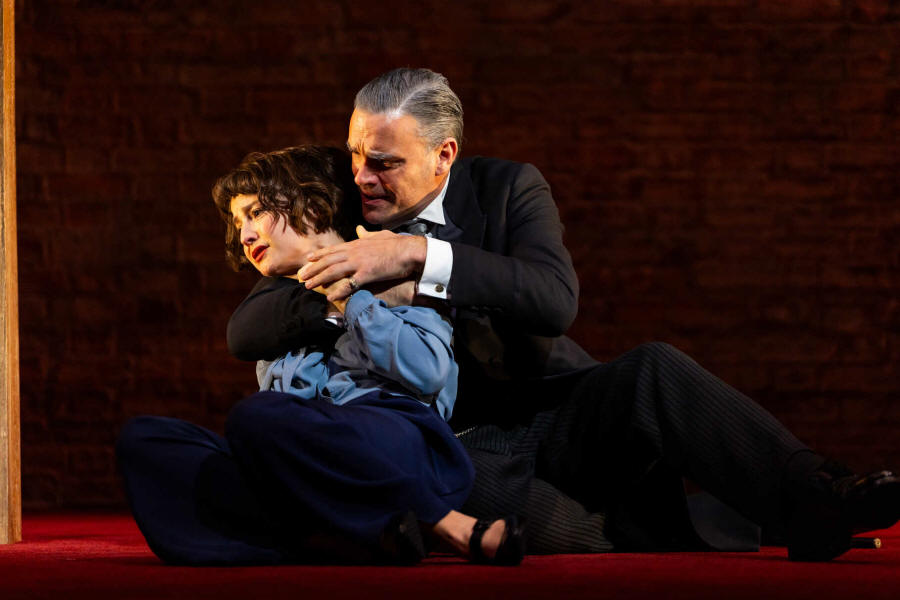
Flora Spencer-Longhurst as Fleur and Joseph Millson as Soames We have every sympathy for Irene, a lovely performance from Fiona Hampton, in a cold, love forsaken marriage and when she falls for the architect of the house Soames is building, her husband rapes her to regain possession of his property, an act legal at the time which perhaps indicated the then place of women and wives in society. The architect is Philip Bosinney, played with a youthful intensity by Andy Rush. Bosinney is the fiancé of Irene's closest friend, June Forsyte, another on the cusp of Forsyte modernity, played with a young girl's sense of adventure by Florence Roberts. June is the daughter of Soames's estranged cousin "Young" Jolyon by his first wife. Irene's affair might have been at the end of her marriage, but it was also the death knell of her friendship with June. Our guide in all this is Fleur Forsyte, a stunning performance from Flora Spencer Longhurst. Fleur is the daughter of Soames from his second marriage and represents a world changing around her father and leaving him behind. Soames is the thread running through both parts - here is a man who believes love can be bought like a house or a painting and once bought is yours to use in whatever way you choose. The relationship with Irene is not the standard nasty husband, victim wife but far more subtle and chilling, a drip, drip, drip of coercion and emotional brutality displayed in society's drawing rooms and dinner parties where decorum had to be maintained whatever the cost, making it seem almost polite and respectable.
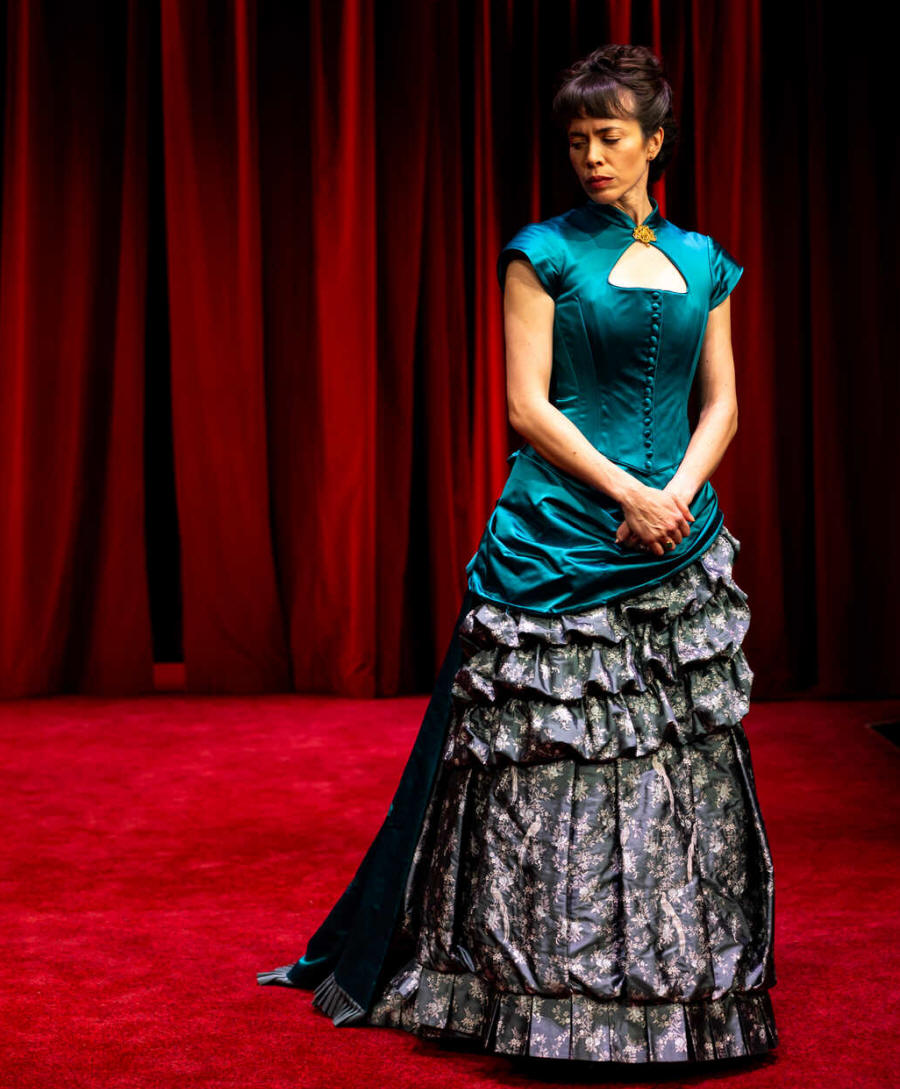
Fiona Hampton, as Irene While part1 was about possession, part 2; Fleur, was more about the consequences, a world and a family in transition with a new love story. A perceived affair by Irene, not a Forsyte by birth, with "Young" Jolyon was Soames’ socially respectable excuse for divorce. It shunted the fault away from the family, ruining Irene but leaving Soames . . . and the family's reputation unscathed. He was to marry Annette daughter of a French restaurant owner and Fleur was their daughter. Young Jolyon, played by Jamie Wilkes, had left his first wife for his daughter's governess, a scandal which exiled him from the family for years and was proof that a Forsyte could choose love over wealth, property, position or status. The governess had died leaving Jolyon to bring up their son Jon alone. His friendship with Irene grew into marriage, Jolyon having little regard for the conventions of the society Soames was afraid of offending. Young Jolyon was Old Jolyon's favourite son and as he grows older the old man softens and tries to heal the rift. It is a beautifully nuanced performance in both parts from Michael Lumsden. As for Irene and Soames? When Fleur and Jon meet and fall in love old wounds are reopened. Annette, incidentally, is played by played Florence Roberts while the older June, who attempts matchmaking between Fleur and Jon is now played by Emma Amos, who played Juley Forsyte in Part 1, the unmarried sister of Old Jolyon, a dowager who loves hearing and broadcasting gossip. With the demise of Bosinney in Part 1 Andy Rush is reincarnated as Jon.
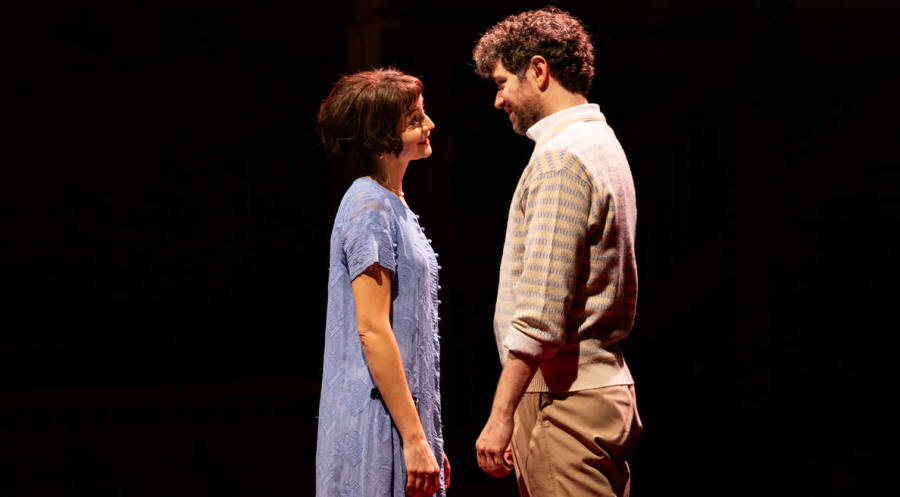
Flora Spencer Longhurst as Fleur and Andy Rush as Jom As the truth emerges so do the rifts. Irene is afraid Fleur could have inherited her father's obsessive nature and cannot bear for her to inflict that on her stepson and that sees love's sweet bloom fade. Jon still desperately loves Fleur but is torn, he cannot bear to hurt his stepmother and perpetuate the unhappiness of the past, so walks away, away as far as Canada leaving Fleur distraught, a love destroyed by a past neither had a part in. Whether out of duty, need, convention or desperation Fleur marries Michael Mont, son of a baronet with a title but little wealth who has been hopelessly wooing her for months, He is the polar opposite of Soames. Where Soames is possessive, Michael is generous, witty, tolerant, politically engaged and socially aware, even becoming an MP. He's affectionate, and while Soames is obsessed by class, Mont is part of what Soames craves to be and thinks nothing of it, class even amuses him. He is played by Jamie Wilkes again with a lovely contrast. Whether Fleur ever loves him we never know, but she never feels for him with the same intensity she had and still harbours for Jon, and Mont knows that, making him a sad figure with a quiet and tragic dignity. He takes all our sympathy when Jon and his American wife arrive back in England and passions with Fleur stir again. While part 1 sets the scene almost satirising the social mores of the age, part 2 has a more intense emotional depth. Whether Soames softens . . . who knows, but he is in another marriage that could hardly be seen as a success, and we see him left confused and almost floundering in the rapidly changing world of the 1920s. We see his love for Irene and the sense of loss that seems to transcend his sense of possession, a love he still finds difficult to express. We may not like him but he cuts a sad forlorn figure, living a life anchored in a past the world has left behind. One of the strengths of this production is the steady pace, nothing rushed as we change from 19th to 20th centuries emphasising the passage of time and the slow transformation of society from the suppressed emotion and cloistered social values of the Victorian era, through the Boer War and WWI and into the 1920s with a changing order, a more liberal modern outlook, a general strike and changing politics with a shout out here to costume designer Anna Yates whose costumes mirrored the changing times, wonderful details.
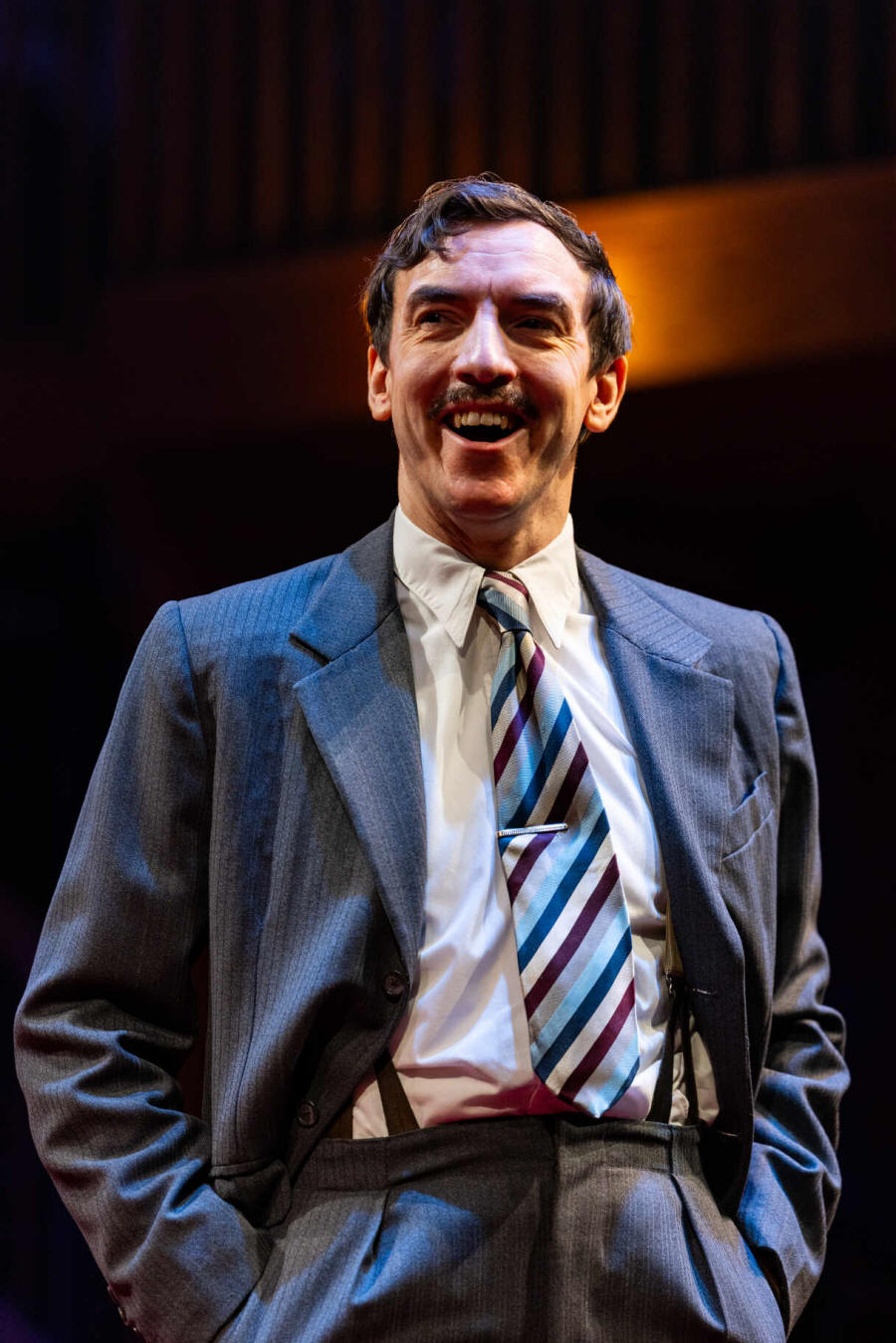
Jamie Wilkes as Michael Mont The result is a stunning piece of theatre with the empty stage giving the cast the chance to indulge us with the full range of the actor's art without distraction. Despite the story and the books ending a century ago, we are left with a very modern play in terms of its themes, whether it is controlling relationships, morality, social standing and position or even class There is no solution, no happy ending. In Soames we have a man whose obsession with ownership and possession and a belief love was a commodity to be bought destroyed both his marriage and the woman he loved but could not see beyond his creed enough to show it. A doctrine that was the driving force of the entire family tragedy. It poisons not just Irene but also those around her and the generation that follows. The two plays, really one covering two generations, are intelligent, they make you think and press psychological buttons. Directed by Josh Roche this is simply superb acting and magnificent, magical theatre - theatre at its very best. Roger Clarke 19-12-25 |
|
|
|