|
|
|
|
|
|
Stars explained: * A production of no real merit
with failings in all areas. ** A production showing evidence of not
enough time or effort, or even talent, and which never breathes any real
life into the piece – or a show lumbered with a terrible script. *** A
good enjoyable show which might have some small flaws but has largely
achieved what it set out to do.**** An excellent show which shows a
great deal of work and stage craft with no noticeable or major
flaws.***** A four star show which has found that extra bit of magic
which lifts theatre to another plane. |
|
|
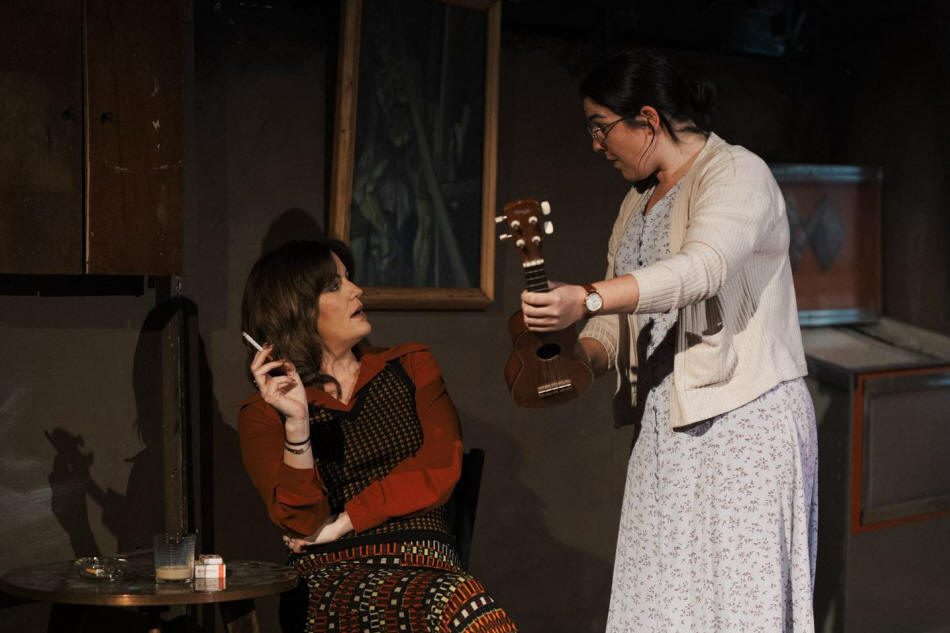
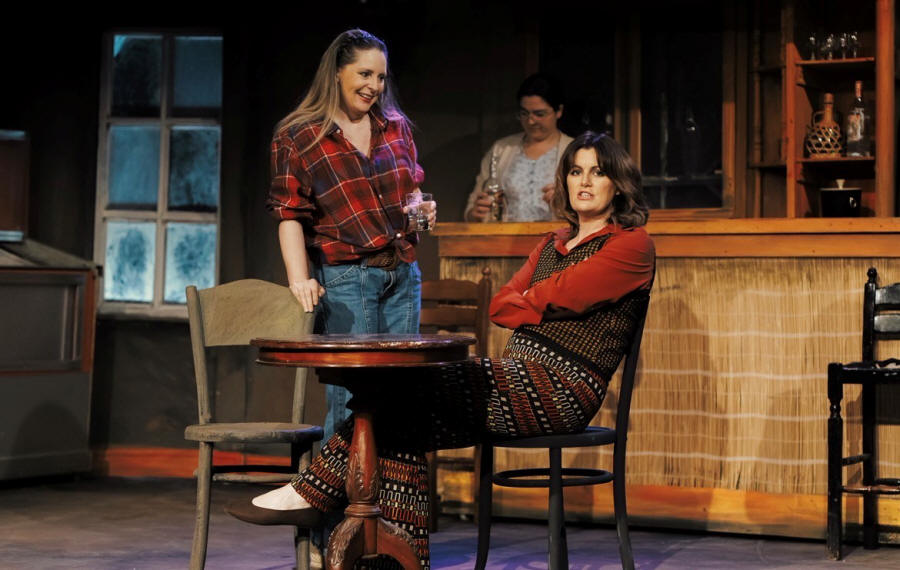
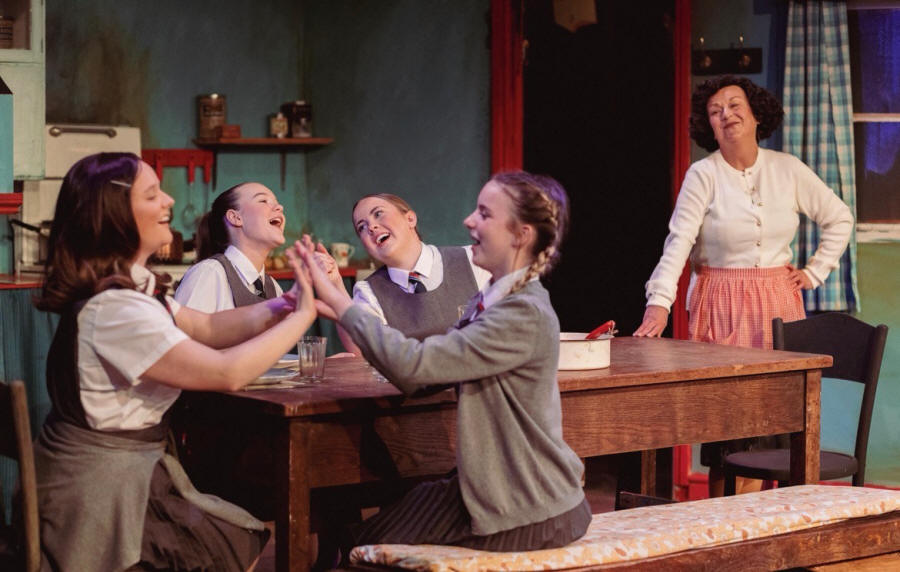
The Hills of California Sutton Arts Theatre **** Jez Butterworth’s fourth play, following in the considerable footsteps of his huge hit Jerusalem, draws from a more personal foundation, basing it loosely on the experiences of his own family. Inevitably then, this offering comes with hope and no little pressure given the global acclaim of his previous masterpiece. The story starts during the 1976 heatwave, centring around a dying mother whose four daughters reunite at her Blackpool home to be with her in her time of need. Sibling tensions are never far away as the sisters constantly niggle and push against each other the way that siblings (especially girls, I’m told) do. Love is there somewhere but often hidden in acrimony and squabbles. These scenes between the grown-up sisters are particularly strong, allowing Butterworth’s incisive dialogue to be let loose and be given space for the attack and sensitivity to be explored. Considering the writer is a man, his writing for female characters is astonishingly observant, presenting very defined and different characters, all with their own tale to tell. Having established the sisters as grown-up women, the story switches to the past, revealing the daughters now as young girls living in the seaside guest house run by their mother, Veronica (Emily Armstrong), a woman hell bent on getting her girls to the top of the showbiz tree with their ‘Andrews Sisters’ type act. Vicarious ambition at its ugliest, no matter what the price. That price becomes evident when a big time American agent pays a visit, taking an unsavoury interest in one of the daughters. As action alternates between the two time periods, other characters come and go to put flesh on the bones, but it is the family dynamic and developing tensions that provide the main strength of the play. Speeches and interactions are given time to hit home and the range of emotions, from despair to blistering anger are well represented. Mark Nattrass’s set design is authentic and practical, reflecting two contrasting time periods well. Lighting is crucial here too. David Ashton’s design brings out the sweltering bright heat of that for the 1976 summer and contrasts it nicely with a more dingy feel for the earlier time period. The extra width of the Sutton Arts stage actually helps too - allowing the grown-up sisters to put physical distance between themselves when tensions are high. There are strong performances, in particular from the female cast, who, to be fair, are given a lot more to play with. The sisters are drawn well, each with their own back stories and traits. There is Jillian (Phebe Bland), the mousy but kind one who looks after her mother and wants the world to be drama free. Bland captures her nervous timidity well and provides a perfect foil to her more extrovert sisters. Then there’s Gloria (Laura Hinton), a whirlwind presence of pent up resentment who doesn’t seem to have smiled in years. Hinton controls the outbursts well, allowing moments to sulk and breathe whilst others have their turn. Ruby (Michelle Dawes) is the slightly bored one, wanting more from her life. She is the most affectionate of the sisters and seems genuinely pleased to see them (to a point). Dawes tackles her well in a nicely paced performance, richly toned too. Fourth sister, Joan (Emily Armstrong) returns to the fold late in the play. She has been living out in California (as her entrance in a full-length Afghan Coat and shades testifies/testify) and has not been home in years. Nor has she written letters or been in touch - another major point of contention for the other sisters. There is certainly much to discuss on her belated return,,, and boy! Is it discussed! Armstrong also appears as the glacial matriarch, Veronica - splitting her time between running her guest house and preparing her four young daughters for ultimate ‘fame’. Motherly warmth is in short supply, replaced by a bitter outlook and a steely determination to push her girls to the top … whatever it takes. Armstrong takes on the, often, angry speeches well - using light and shade where needed to avoid too much venom. She contrasts it nicely with her second character, Joan. Laid back, spliff influenced and self-loving. Lovely performances too from Sophia Mae Firkins, Gracie Reynolds, Marnie Brown and Ava Cattell playing the young Gloria, Ruby, Jillian and Joan respectively. All four inject their characters with real energy and create a believable sisterly bond. And they must have had serious fun in rehearsal smoking all those ciggies. Sometimes theatre is a valuable life lesson!! As much as the female roles take centre stage, one male character stands out. Ian Eaton as the smilingly creepy showbiz agent, Luther, is suitably slithery. Pristine in his white suit but dark as hell beneath the glitzy veneer.
There are niggles, but they are minor. Pace at times is a little slow with cues needing to be driven through more on occasion. It also feels like it could be a two interval play as it nudges the 3 hour mark (including interval). The final scene when Joan returns from California is engaging but lengthy and could be a third act. All that is structural though and no reflection on the performances. The musical sections are interesting. The play almost turns a little ‘Mary Poppins’ when the children are gathered around the piano to sing but they at least provide some pleasing lighter moments amongst the storm of emotions gathering. A huge plus here is the casting. Amateur theatre can occasionally suffer from inappropriate casting when ideal casting choices are simply not available. This is not the case here and care has clearly been taken to get the casting right at every level. The right casting, as one famous Director once said, is 80% of any production. The large and hard-working supporting cast is completed by Ashleigh Thomas, Mark Nattrass, Nancy Wright, Connor Taylor, Mike Rawson, Rich Millward and Tom Brookes It’s fair to say the language is at times ‘industrial’ but crucially it’s also authentic. This is no mild mannered, period drama – it’s real, grounded and in context. Hard hitting, emotionally charged and full of standout moments. The Hills of California Runs Until 28th March Tom Roberts 20-03-26 |
|
|
|